Common Backyard Birds Across Canadian Provinces
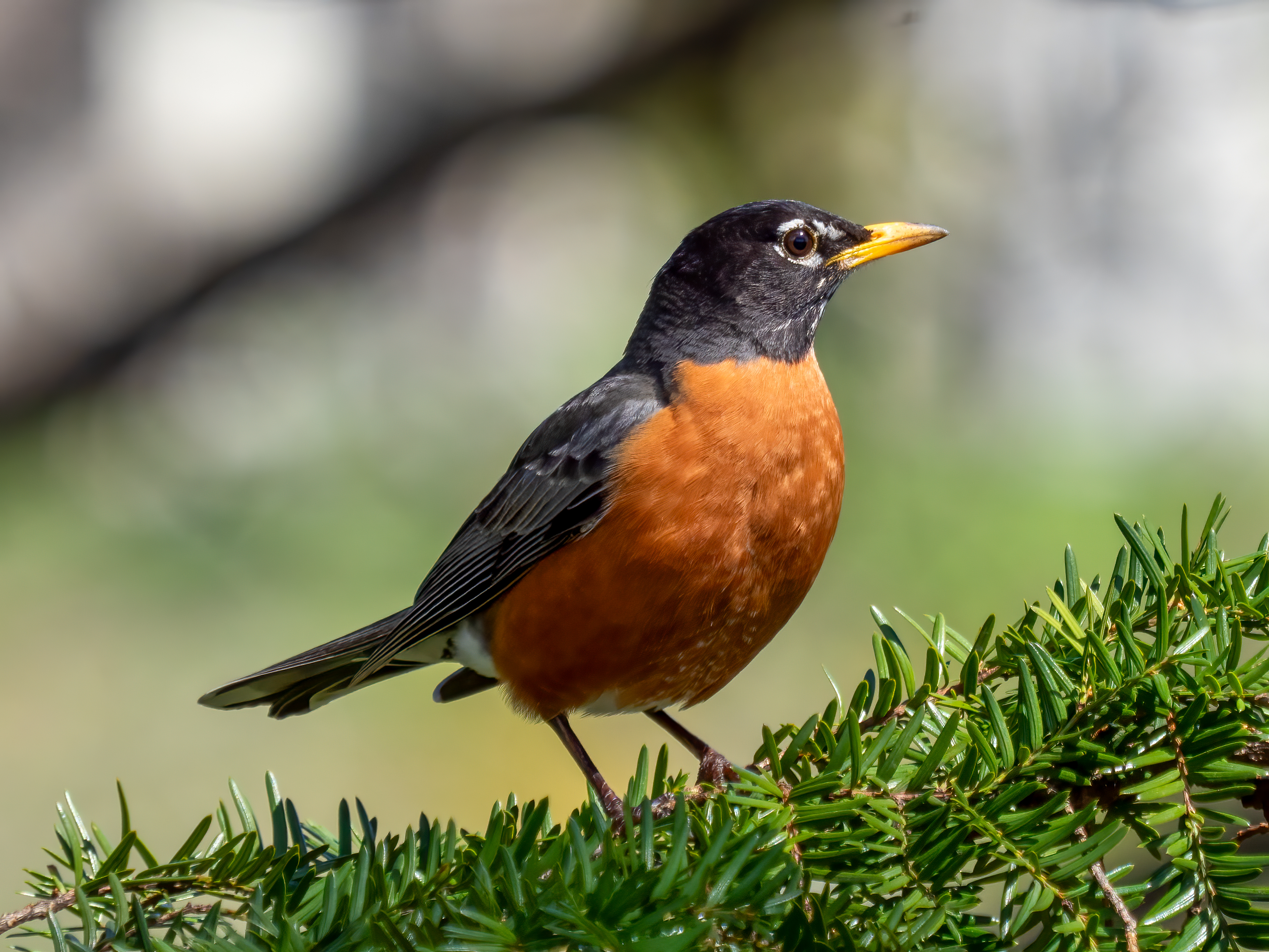
Backyard birds in Canada fall into two loose groups: residents that stay through the cold months and migrants that arrive or depart with the seasons. Knowing which group a bird belongs to explains a great deal about when you will see it. A chickadee at a January feeder is no surprise; an American Robin singing in late March often marks the turn toward spring in much of the country.
This guide describes species that backyard observers report regularly, with notes on where in Canada they are most often noticed. Ranges overlap and change year to year, so treat the regional pointers as a guide rather than a fixed map.
Year-round residents
These species do not leave when temperatures drop, which makes them the backbone of winter feeder watching.

Black-capped Chickadee
Poecile atricapillus
Small, active and confiding, with a black cap and bib. Found across most provinces and often the first bird to investigate a new feeder. Takes sunflower seeds one at a time, carrying each away to open.

White-breasted Nuthatch
Sitta carolinensis
A compact bird that habitually climbs head-down on trunks and feeders. Grey above, white below, with a black crown. Common in wooded yards in southern and central regions.

Downy Woodpecker
Dryobates pubescens
The smallest woodpecker in much of Canada, black and white with a short bill; males show a small red patch at the back of the head. Readily visits suet through winter.

Northern Cardinal
Cardinalis cardinalis
The bright red male is unmistakable; females are warm brown with red highlights. Most regular in southern Ontario and parts of Quebec, where its range has expanded northward over time.
Seasonal and migratory visitors
Other familiar birds come and go. Watching for their arrival and departure is part of the rhythm of a backyard through the year.

American Goldfinch
Spinus tristis
Males turn bright yellow in the breeding season and a duller olive in winter, which often confuses newer observers. Favours nyjer and sunflower hearts and frequently feeds in small groups.

Dark-eyed Junco
Junco hyemalis
A neat grey-and-white sparrow often called a winter visitor in southern yards, where flocks feed on the ground beneath feeders. White outer tail feathers flash in flight.

Blue Jay
Cyanocitta cristata
Large, crested and vocal, blue above with bold black markings. Present year-round in many areas but more conspicuous in autumn when birds move and cache food. Favours whole peanuts and sunflower seed.

House Finch
Haemorhous mexicanus
Males show reddish wash on the head and breast; females are streaky brown. Common around towns and suburban yards, often arriving at feeders in lively groups.
Reading the season
A useful habit is to note first and last dates for the birds that move. The pattern repeats loosely each year and quickly builds a sense of what is normal for your own yard.
- Late winter: residents dominate; watch for the first returning songbirds toward the end of the season.
- Spring: migrants arrive; some winter visitors such as juncos move on to breed farther north.
- Summer: breeding birds may bring fledglings to feeders, which can look unfamiliar.
- Autumn: movement increases again; jays and finches are often more obvious.